Module four- Digital connections write up

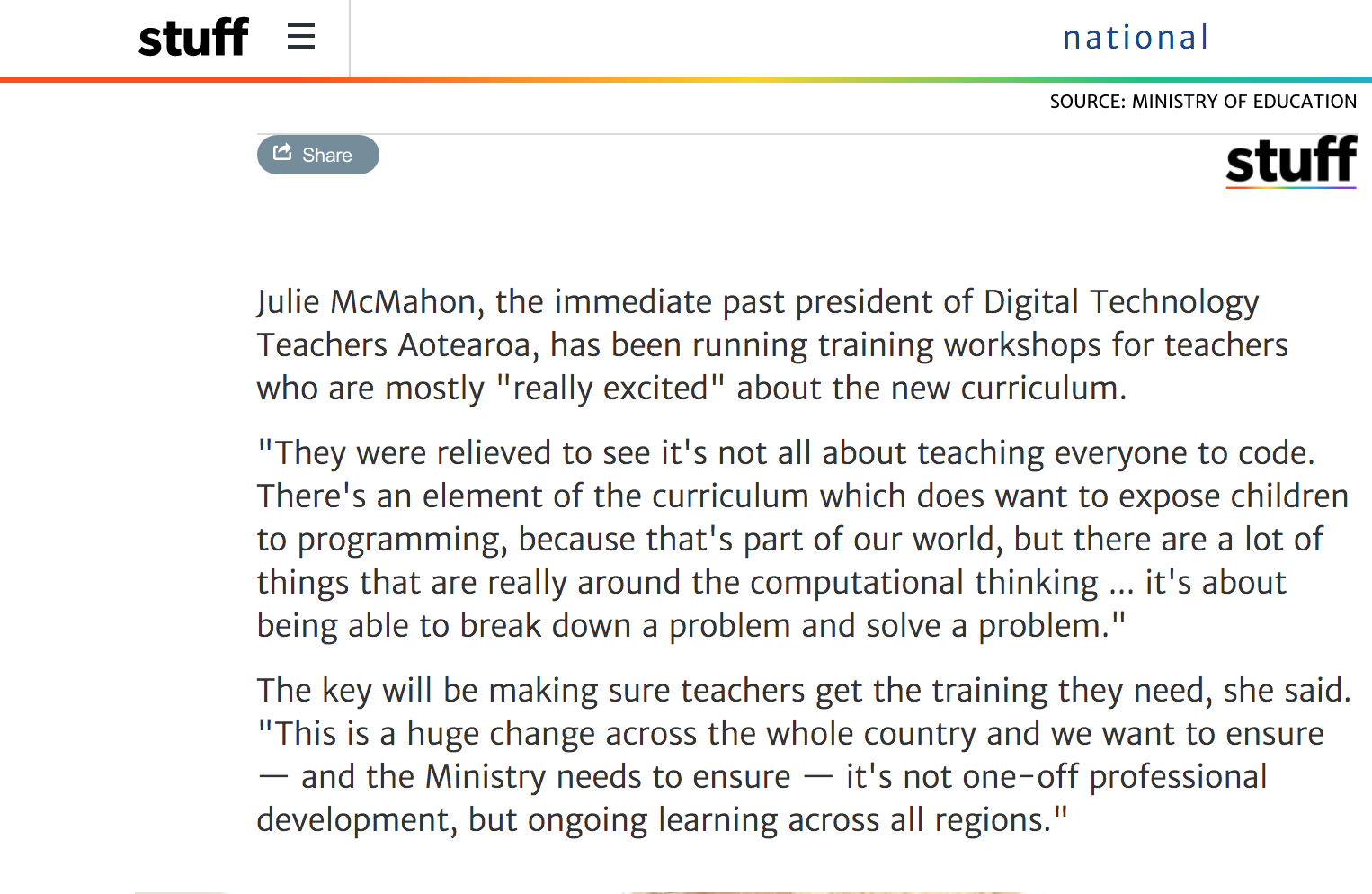
Kenny, K. (2018, January 29). The digital shakeup has arrived, but are schools prepared? Stuff.co.nz, p. 1.

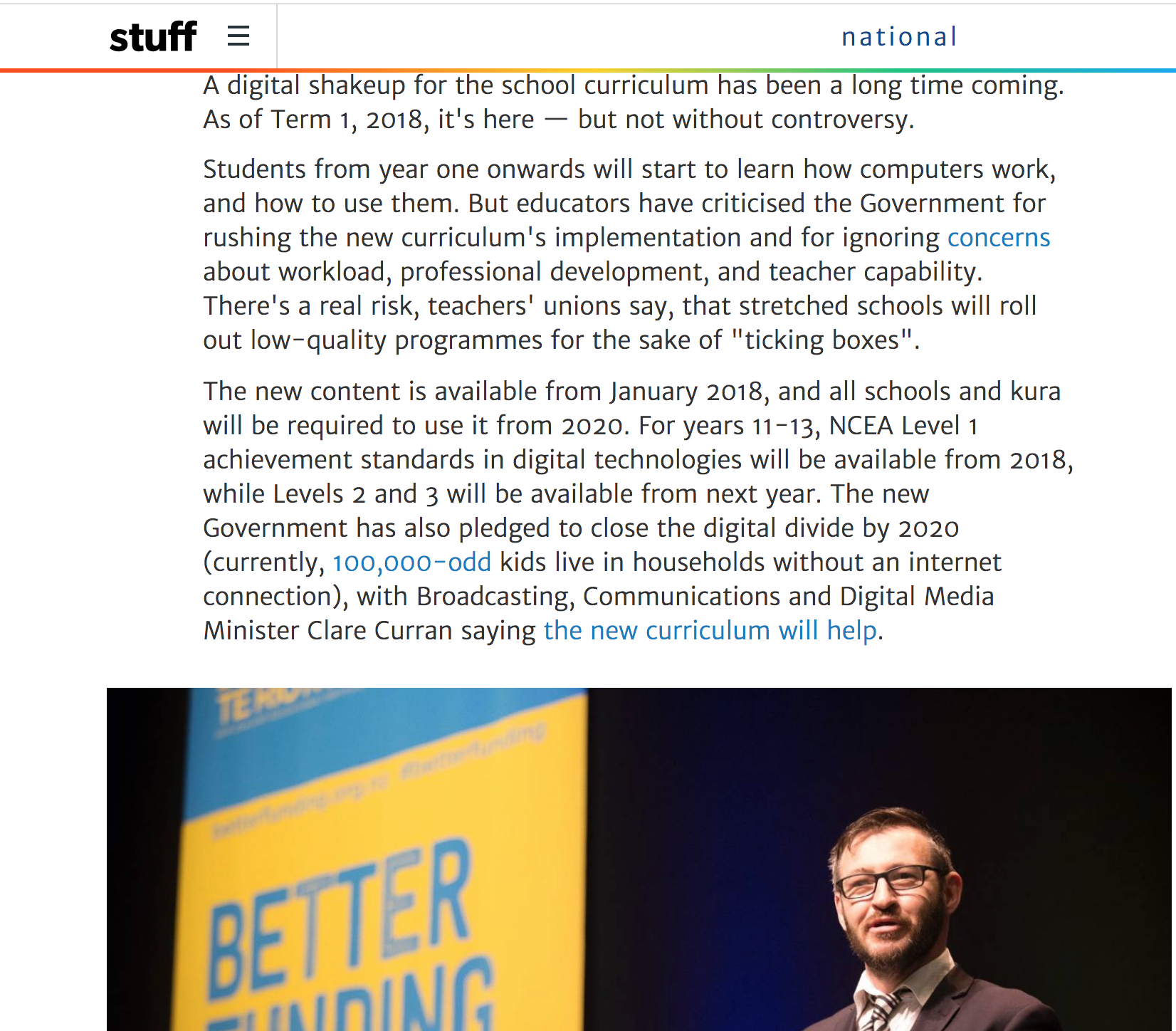
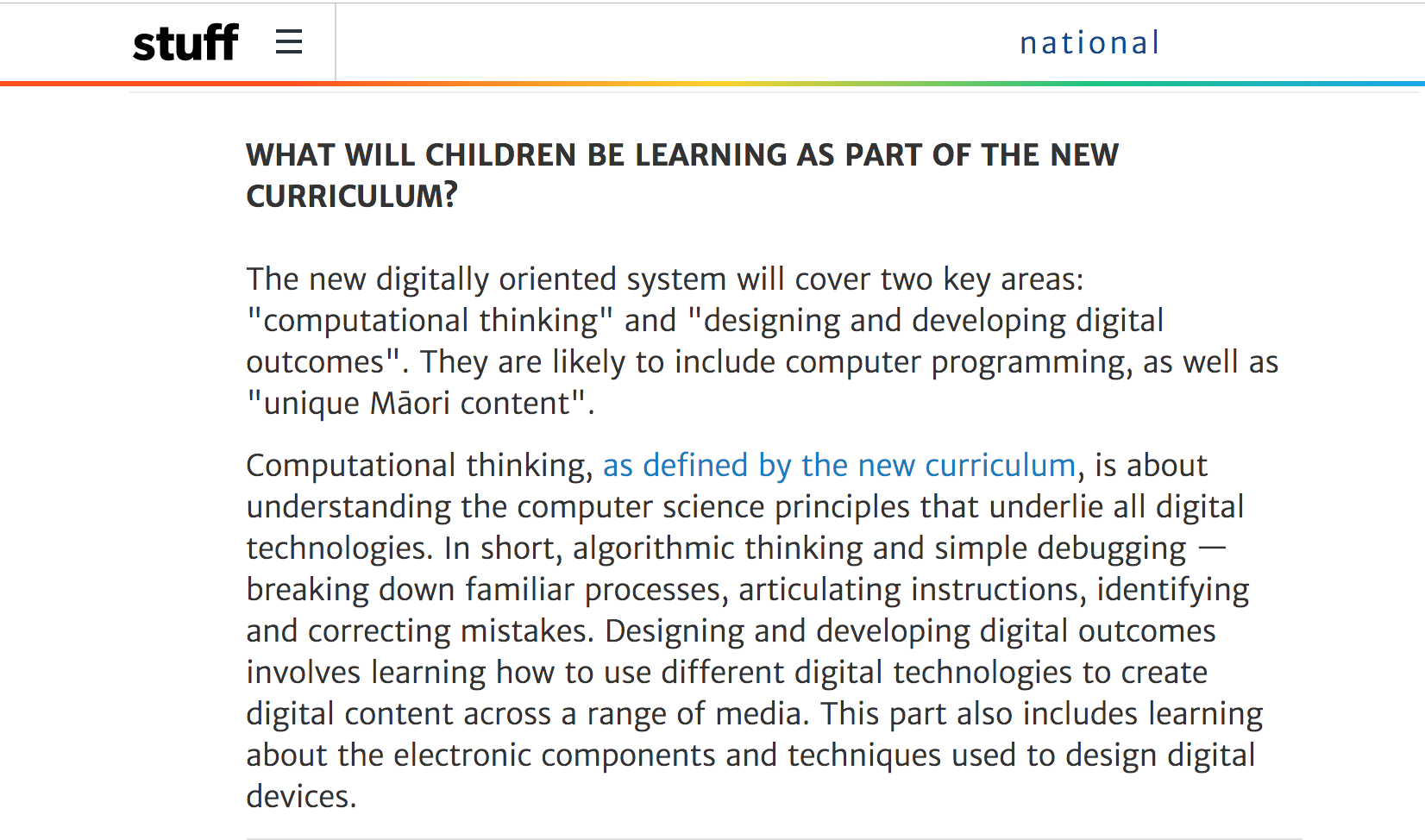
In relation to digital connections and networked learning as discussed in this module, there was a very interesting newspaper article that I found discussing how the digital age in relation to learning is approaching very fast, and questioning whether we, as a community are ready for the big change and shake up. It states that children as young as year one will begin to learn how to work a computer (if they don’t already know how to do so). This is because it has been found according to this article, that most graduate jobs require technology and online skills, so to start them young they are setting them up for a life time of success due to us living in the digital age.

An affordance to this in relation to learning is that it creates a fun, more interactive learning environment, where children can have fun while learning crucial skills to better their chances of succeeding in school. They can learn how to communicate with other people no matter what or no matter how, by being online. A good statement that really helps me see the positives in this is that of “while technology does not replace effective curriculum and pedagogy, it provides an enabler and catalyst that can remove barriers to access and create possibilities for innovation” (Netsafe, 2018 p. 15).

A limitation as stated in this article is that not everyone can afford devices, so how can those from low income families be expected to pay mega dollars for a device for their child when the money can be used for much better, more important things. However, according to this article, having the new curriculum as explained in this article will close the gap between those kids who live in households with no internet in comparison to those who have internet and devices. This is because there will soon be no choice, as I believe internet will be/ already are required for educational purposes, so the government may have to start funding some of these extra costs to support those families in need. According to Amy Jackman, “There are cases where students have started more than a month after their peers,” (Jackman, 2016), making it already a serious issue, as children shouldn’t miss school for a reason such as that. We need to do something about that, and hope that this doesn’t turn into a serios issue.

References:

Jackman, A. (2016, January 14). Families struggle to afford the rising cost of back-to-school requirements . Stuff.co.nz, p. 1.

Kenny, K. (2018, January 29). The digital shakeup has arrived, but are schools prepared? Stuff.co.nz, p. 1.

Netsafe. (2018). From literacy to fluency to citizenship: Digital citizenship in education. New Zealand. Retrieved from http://www.netsafe.org.nz/2017xyz/wp-content/uploads/2018/06/From-literacy-to-fluency-to-citizenship.pdf

Module four- Digital Connections

Martin de Laat talks about networked learning: Networks are Everything

While listening to this video, I felt very confused. I understand the concept of networked learning and the group named “The Crowd” for teacher’s benefits and what not. However, Marteen goes on to talk about how we should all begin to discover these new Networks that are online, and we should all contribute to them. The only thing that goes through my head when discussing this is… how do we know who were talking to? How do we know if its safe? Some people are really technologically savvy in this day and age and have the ability to put GPS trackers onto other people’s computers/devices just by sitting on their computer. If he’s suggesting for our kids to partake in Networked learning, how do we keep them safe? Marteen states that networked learning is very fluid and open, but to me that is the most dangerous thing about it. In saying that, it means that anyone can partake and do what they wish.

An affordance in relation to Networked learning in my opinion is not so much networked learning itself, but the skills that come with it. From a young age, the skills such as collaborator, creator and communicator can be taught through online networking learning. If we refer back to Alec Courous TEDtalk, as stated in the video, children technically don’t mature online until the age of 11. This is when children must begin to learn these skills that is required of them to become a ‘digital learner’

The main limitation and the one that is sticking with me the most is the fact of children’s safety. Is it worth it in the long run? If I look at it from a parent’s point of view, I don’t think I would be happy with my young child going online to talk to people who he/she doesn’t know. The other limitation in relation to networked learning is that fact that children may get distracted on their device while talking to other people in an educational setting. This can, in turn, jeopardise their grades and marks if it continues and is constant. “There is an ongoing need for sustained and dedicated support, so schools can provide safe and secure digital learning environments” (Netsafe, 2018).  Who is the one responsible for ensuring that children are safe and secure on their devices during school time?

References:

Couros, A. (2015, March 17). Identity in a digital world. Identity in a digital world. Canada: Youtube.

Netsafe. (2018). From literacy to fluency to citizenship: Digital citizenship in education. New Zealand. Retrieved from http://www.netsafe.org.nz/2017xyz/wp-content/uploads/2018/06/From-literacy-to-fluency-to-citizenship.pdf
Module three- Digital Participation write up

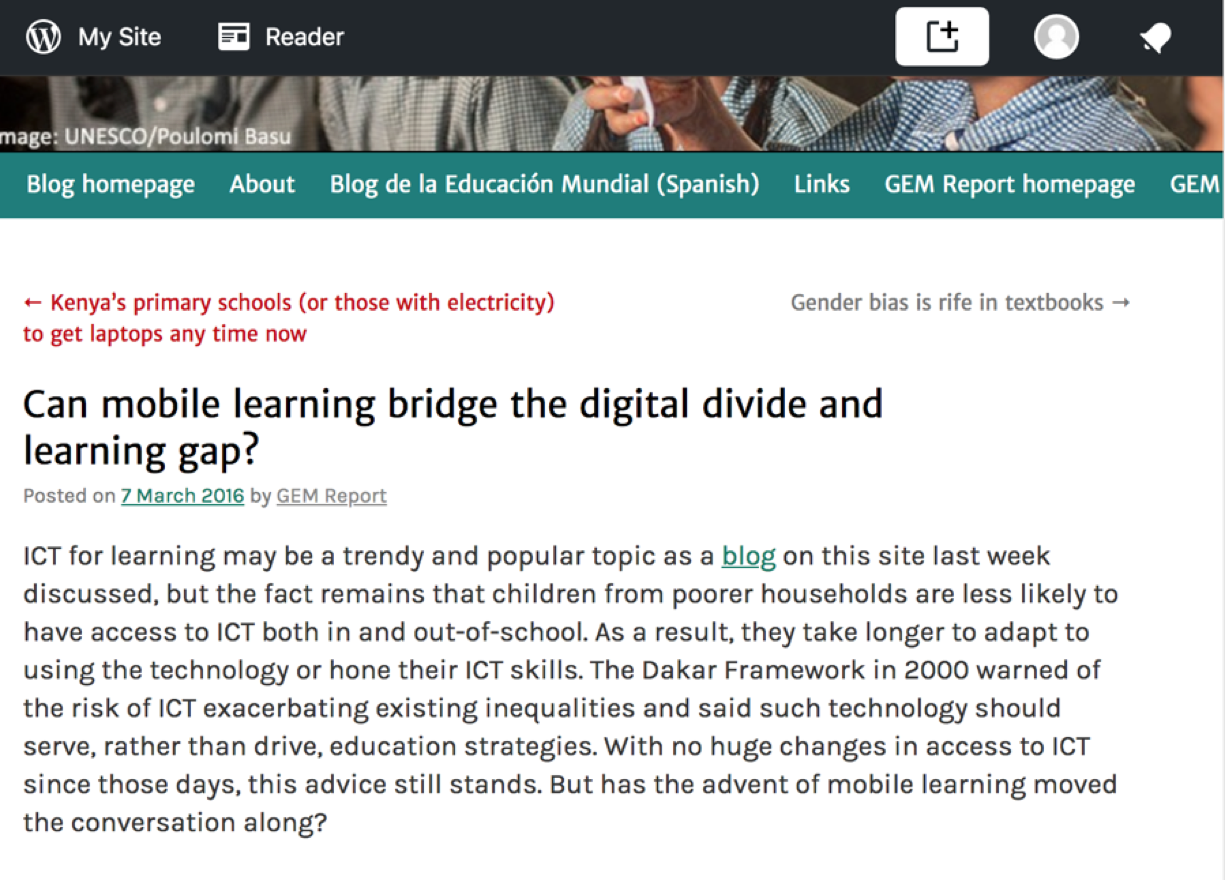
Can mobile learning bridge the digital divide and learning gap?The digital divide in language and literacy education.Written by Tate, T., & Warschauer, M

The world Education blog highlights the concept of a ‘Digital Divide’ and how that impacts on education as a hole. If were talking about digital participation, how is it fair on those innocent children who cant participate due to families can’t afford the internet or a device of some description? Due to this issue that is occurring more and more, it has made me think about some things that I would do differently when I become a teacher. I think it is important that technology is used in classrooms however, I would make the majority of the work done on pen and paper so those who aren’t so fortunate and for those who don’t have a device or don’t have the skills to work a device don’t feel left out and can still thrive in their education.

A constraint to this idea around mobile phones bridging the digital divide gap in my opinion is as stated in this blog, some parents just can’t afford to supply their children with smartphones for their education. Some parents struggle to find enough money to put food in the pantry’s or gas in their car, let alone forking out hundreds of dollars for a phone. The only real solution to this is having funding options readily available for those families who struggle, so that everyone has the ability to experience this new technological side of learning. “Schools have worked hard to negotiate deals, and affordable payment plans for families, knowing the extra pressure BYOD policies can put on hard-pressed families” (Stock, 2019).

An affordance to this idea is that children have the ability to take their learning with them wherever they go. Children have the ability to look into other children’s learning, while they think of their own and have the power to make critical analysis on their learning and others, to further enhance their chance for success. “With internet access, children can be exposed to a world of creative ideas outside of their bubble. They can learn other languages, teach themselves how to draw, knit, or play chess. They have access to an endless array of options available to help them learn, and gain skills they might not otherwise be exposed to. All of this can be accomplished through a smartphone, which can be a valuable learning tool, if used correctly” (Team, 2012).

References
Stock, R. (2019, January 11). Strategies for parents facing ‘BYOD’ school device spend-up . Stuff.co.nz, p. 1.


Tate, T., & Warschauer, M. (2017). The digital divide in language and literacy education. In S. L. Thorne & S. May (Eds.), Language, Education and Technology (pp. 45–56). Cham: Springer International Publishing. Retrieved from http://link.springer.com/10.1007/978-3-319-02237-6_5


Team, T. R. (2012, November 7). Debating the use of Digital Devices in the Classroom. Retrieved from education.cu-portland.edu: https://education.cu-portland.edu/blog/classroom-resources/pros-and-cons-of-allowing-digital-devices-in-the-classroom/

Module two- Digital Identity

TEDtalk Alec Couros

Digital identity is all about “an electronic representation of an individual…allows us to reliably prove who we are and to take part in society(New Zealand Government, 2019). Being in a society in which is shaped around technology and social media, it is very important to keep your digital identity safe, and to ensure you are keeping other people digital identity safe. As these digital platforms advance, they have the ability to actually ‘remove’ our digital identity. Take Snapchat for example. You can post whatever you want to whoever you want, however it disappears for good after a certain period of time, never to be seen again.
 
In Alec Courous’ TEDtalk (Couros, 2015), the main themes that stood out for me was the fact that a few many years ago, our stuff that was put online was private by default and public by choice however, this theme has drastically changed to that of private by effort and public by default. This being said means that we must go out of our way to ensure that everything we put on the web is private, and if not then we must expect it to be shared with anyone and everyone no matter what.
 
An affordance in relation to digital identity in terms of education is that you have the ability to connect with anyone all over the world. This means you have a chance to comment on other peoples work, and reflect on your own work once seeing someone else’s. Alec Couros, a professor from Canada stated in his TEDtalk that having the ability to comment on other people’s work is very important for educational purposes (Couros, 2015)

 
On the other hand, the limitation to this thread being digitial identity is the fact that something can be taken differently to how you wanted it to be. This can then lead to cyber bullying and in extreme cases, suicide. Whether it be something private that got altered or shared around in a vicious way can also affect your education as bullying can go from online to physical bullying in a school environment. Or something that was for educational purposes can be taken and mimicked/made fun of, ruining ones self confidence and ability to thrive in their educational setting. People need to ask themselves more often if its worth it?
 
 
References

Couros, A. (2015, March 17). Identity in a digital world. Identity in a digital worls. Canada: Youtube.

New Zealand Government. (2019, March 14). Digital Identity. Retrieved from digital.govt.nz: https://www.digital.govt.nz/standards-and-guidance/identity/digital-identity/


Digital Information-Module one

“From literacy to fluency to citizenship”

In this reading, it clearly states that “the internet affords new ways of working and learning, and in turn, new challenges are emerging and evolving for children and young people and those who support them” (Netsafe, 2018 p. 5).

It goes on to develop the new trend in schools, and daily life being technology. Due to the update in technology and all its advantages, schools, workplaces, and family/personal environments are all centered around technology. In relation to schooling and education, this reading talks about becoming a digital citizen, meaning one must be able to acquire skills and strategies unpinned by values and must have a good sense of understanding digital environments through knowledge. “Netsafe defines a digital citizen as someone who can fluently combine digital skills,knowledge and attitudes in order to participate in society as an active, connected, lifelong learner” (Netsafe, 2018 p. 6). After reading through this article, it made me think about many affordances and limitations to technology in education.

A limitation in terms of being a digital citizen in relation to education is that nothing on the internet is what i I call ‘sacred’. Even for school students of any age. Information and data can be leaked and therefore, breaching privacy and safety of these school students.”Technology as objectified capital means nothing on its own – it is only through embodied cultural capital or social capital that the technology can be appropriated and used in accordance with its specific purpose” (Czerniewicz & Brown, 2010 p. 864).

An affordance in relation to this reading in regards to digital citizenship and relating it back to education. Being in an era that is based around technology and social media, it is seen as crucial to gain the skills to know how to work computers and online. If these children are taught how to be safe and secure online from a young age, then there should be no reason as to why technology shouldn’t be allowed in schools. Being in the digital age means being raised thoruigh the era based around technology. Everyone in todays society knows how to work a laptop or a device of some description. It can create many different learning styles which can help children depending on what type of learner they are. “
Today’s students not only have computers to help them with their schoolwork, they have easy access to research tools while teachers use technology to enhance the impact of their lessons” (McCoy, 2019).


References

Czerniewicz, L., & Brown, C. (2010, May). Born into the Digital Age in the south of Africa: the reconfiguration of the ‘digital citizen’. In Proceedings of the 7th International Conference on Networked Learning (pp. 859-865).
Chicago
 
McCoy, W. (2019, February 5). Five Positive Effects of Technology on Education . Retrieved from Chron: https://smallbusiness.chron.com/five-positive-effects-technology-education-31222.html
 
Melhuish, N., Spencer, K., Webster, A., & Spence, P. (2018). From Literacy to Fluency to Citizenship: Digital Citizenship in Education. Netsafe.(2018). From Literacy to Fluency to Citizenship: Digital Citizenship in Education (2nd ed.). Wellington, NZ: Netsafe.